We help local businesses make more money - it's that simple!
Dominating Your Local Market
6 Surprising Secrets Beyond the Search Bar
Ken Heistand
4/25/20265 min read
Many small business owners are trapped in a cycle of diminishing returns, pouring marketing budgets into traditional channels like TV, radio, and print advertisements. While these "dying" advertising methods might have worked a decade ago, they are increasingly disconnected from how modern consumers find local solutions. The battle for market share is no longer won on a billboard; it is won on the five-inch screen in a customer's pocket.
To dominate your local category, you must understand the "discovery journey." Consider a local bike shop in Wichita, Kansas. A family looking for a weekend activity is rarely searching for a specific bike model or technical specifications first. Instead, they are searching for an experience—the Arkansas River Path. By aligning your digital presence with this local landmark, you can transform from a generic retailer into an essential destination.
This shift requires moving beyond basic SEO and positioning your business as a local authority. By understanding the process your customers use to navigate their world, you can occupy the search results at every phase of their journey, ensuring your shop is their first and only stop.
Stop Selling Products, Start Selling the "Experience"
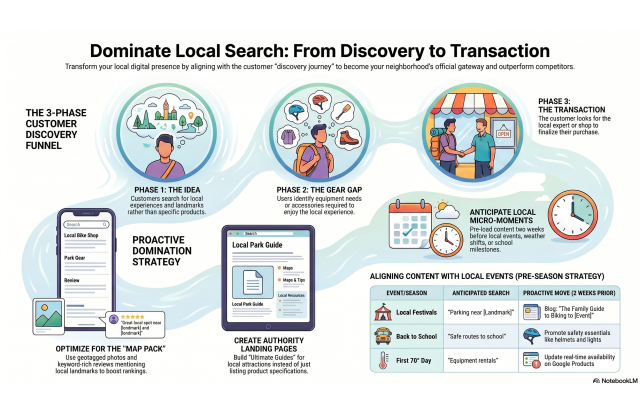
Most businesses fail by jumping straight to the sale, targeting customers only when they are ready to swipe a credit card. To win, you must engage customers through a three-stage "discovery funnel," capturing them when the "Idea" first forms:
Phase 1: The Idea. This is the most transformative insight. Customers search for experiences: "best family bike trails in Wichita" or "is the Arkansas River Path paved?"
Phase 2: The Gear Gap. The realization that current equipment won't suffice. Search terms shift to "hybrid bikes for paved trails" or "toddler bike trailers Wichita."
Phase 3: The Transaction. The search for the expert: "bike shop Wichita" or your specific shop name.
By capturing the customer during Phase 1, you establish trust before your competitors even know the customer exists. If you only focus on Phase 3, you are competing on price and convenience rather than authority.
The "Map Pack" Secret: Geotagged Metadata
To dominate the Google Business Profile (GBP) "Map Pack," you must prove your physical relevance to local landmarks. Start with the technical basics: set your Primary Category to "Bicycle Shop," but significantly expand your reach by adding secondary categories like "Bicycle Rental Service" and "Bicycle Repair Shop."
Next, upload high-quality photos of your specific "River Path" bikes physically located at local landmarks, such as the Keeper of the Plains or the Wichita Boathouse.
"Google reads the metadata and recognizes the proximity to the Arkansas River Path."
This geographic confirmation helps your business rank for "activities near" specific outdoor locations, signaling to the algorithm that you are the logical choice for anyone heading to that landmark.
Reviews are Search Fuel, Not Just Testimonials
Most business owners treat reviews as simple social proof. In reality, they are a goldmine for "long-tail search" results that competitors ignore. You must be prescriptive with your customers; don't just ask for a review, give them a script that mentions your "anchor" landmark.
Instead of a generic "great service" review, prompt your customers with: "If you loved the ride, mention the trail in your review!" A high-impact review looks like this: "I got the perfect hybrid bike for the Arkansas River Path here!" Google uses this text to index your business for highly specific, intent-driven searches, turning every satisfied customer into a micro-SEO agent.
Become the "Digital Tour Guide"
Shift your website from a product-heavy catalog to a "Local Authority" hub. Instead of a generic bike spec sheet, create a dedicated landing page titled "The Ultimate Guide to Biking the Arkansas River Path." Ensure the Meta-Title is specifically: "Best Family Bikes for Arkansas River Path | [Shop Name] Wichita."
A high-performing Local Authority page includes:
Hyper-Local Content: Include a map of the path and specific parking recommendations like Exploration Place or Riverside Park.
Strategic SEO Keywords: Use "best bikes for Wichita river trail" and "family biking Arkansas River."
Expert Product Curation: Feature the Riverside Cruiser (the "SUV of bikes" for concrete bumps) and the Path-Master E-Bike (essential for handling those tough Wichita river winds).
Internal Linking: Direct links from your homepage to this guide to signal its topical authority to Google.
The "Crystal Ball" of Seasonal Anticipation
Dominating a market requires shifting from reactive marketing to proactive anticipation. Use Google Trends to identify search spikes 2–4 weeks before they happen. For example, Wichitans begin searching for "spring bike tune-ups" in late February while it's still cold; your GBP should feature "Spring Trail-Ready" posts in early February to meet that demand.
Anticipate "Micro-Moments" by following the local calendar:
Tour de Wichita (April): Run ads featuring your "River Path" bikes two weeks prior.
The "Riverfest Button" Hook (May/June): Post that anyone showing their Riverfest Button gets a free "Trail Safety Inspection." This aligns you with the massive search volume for "Riverfest events."
Trail Condition Reports: Use social media to report on river flooding or path debris. Google indexes these social signals, making you the most relevant source for trail-related queries.
The "Google Search Console" Hack
To find hidden demand, monitor your Google Search Console for "Impressions" with low "Clicks." This data reveals what people are searching for that your website isn't yet "winning."
If you see high impressions for "bicycle trailers for toddlers" but few clicks, it indicates the market is searching for that item, but your content is likely buried on page two.
"The Fix: Create a specific section on your homepage for 'Toddler Trailers & Family Accessories' to grab that traffic before the summer rush."
By addressing these data gaps early, you claim the category before the peak season arrives and before your competitors realize the demand exists.
The Future of Local Authority
The transition from a generic shop to a local authority is the difference between surviving and dominating. By positioning yourself as the "Digital Tour Guide" and aligning your content with the landmarks and events your customers care about, you stop being just another retail option. You become the official gateway to your community’s lifestyle.
As you look at your own market, ask yourself: Which local "anchor" or landmark should your business claim to become the undisputed expert in your neighborhood?
Ken Heistand is an author, webmaster and creator of web based solutions - helping local business owners learn to harness the power of cell phone searches by turning them into sales.
About this article:
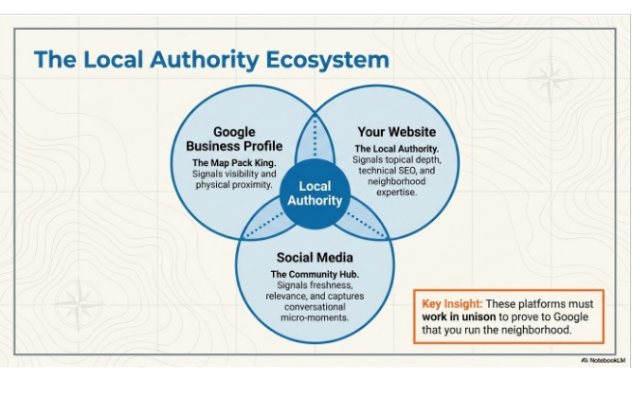
To outperform competitors in local markets, businesses must align their online presence with the specific discovery journey of their customers. This strategy involves using a Google Business Profile, social media, and specialized website content to establish local authority around regional landmarks, such as Wichita's Arkansas River Path. By anticipating seasonal search trends related to weather and community events, a company can proactively position itself as the primary solution for consumer needs. Effective tactics include creating educational blog guides, utilizing geotagged photos, and engaging with hyper-local social groups to build trust. Ultimately, shifting from a reactive approach to a proactive digital strategy ensures a business appears at the exact moment a customer is ready to make a purchase.
They search, you show up first, SALE!!


KB Local Web
Explore our sleek website options for local businesses.
Contact
316-202-9015
© 2026. All rights reserved.