We help local businesses make more money - it's that simple!
The Mind-Reading Merchant
How to Decode What Your Customers Really Want (Without Asking Them)
Ken Heistand
4/17/20265 min read
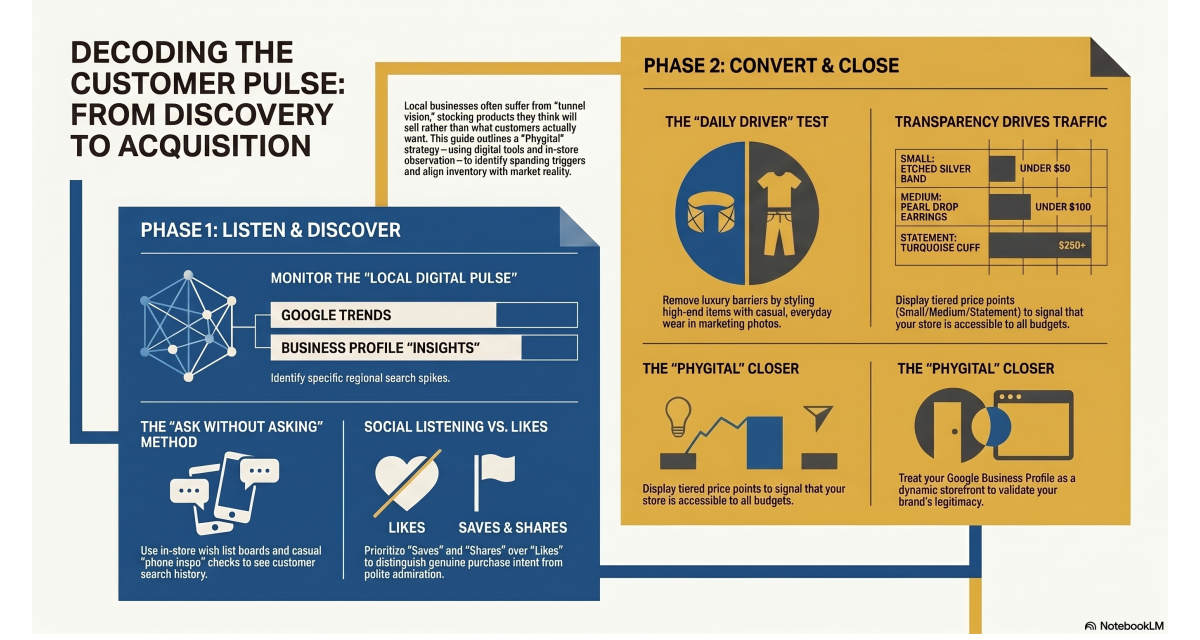
The "Tunnel Vision" Trap
For many small business owners, "tunnel vision" is the silent killer of growth. You open your doors with a curated vision of what your store should be, but often, that vision is a reflection of your own tastes rather than the market’s needs. In retail, guessing is an expensive gamble. Investing in a new product line that sits on the shelf doesn't just waste capital—it costs you the market share your competitors are quietly claiming.
Take, for example, a jewelry store in Grove, Oklahoma. To thrive in a town that blends a steady local population with seasonal "Grand Lake" tourists, the owner cannot rely on what people say they like. They must identify "spending triggers"—the specific cues that turn a "just looking" visitor into a buyer. Success isn't about asking what a customer wants; it’s about observing their life and identifying why they hesitate to pull out their wallet.
Stop Chasing "Likes" and Start Tracking "Saves"
In the age of social media, "Likes" are the digital equivalent of a polite head nod. They signify that a customer appreciates the aesthetics of a post, but they rarely translate to a transaction. As a retail strategist, I look for intent, and intent is hidden in "Shares" and "Saves."
The "Style Showdown": Instead of guessing, run an engagement poll. Post a traditional Western silver cuff next to a modern, dainty gold-filled band. Ask your followers to vote with an emoji: 🤠 for Traditional or ✨ for Modern.
Shares: When someone shares a post, they are often "dropping a hint" to a partner. It’s an ethnographic signal of giftability.
Saves: This is the gold standard. A "Save" means the item is a "dream" purchase or something the customer is currently budgeting for.
"If your Western rings get lots of likes but your baroque pearls get zero saves, it’s a sign the pearls feel too 'niche' or expensive for their current shopping habit."
The "Daily Driver" Test—Breaking the Luxury Barrier
One of the biggest hurdles in retail is what I call the "polite window shopper kiss of death." A customer sees a beautiful baroque pearl necklace on a formal velvet bust and says, "Oh, I love it!" But they don’t buy. Why? Because it looks like a museum piece. They can’t visualize it between the grocery store and the yacht club.
To break this luxury barrier, you must pass the "Daily Driver" test. You need to show that your items possess the "Grand Lake glow"—a shimmer that works as well at a Saturday morning farmers market as it does at a formal dinner.
The Fix: Photograph that high-end necklace paired with a simple denim jacket or a basic t-shirt.
Actionable Copy: "No 'special occasion' required."
By moving the jewelry from a sterile display to a "mundane" setting—like a hand holding a coffee cup by the lake—you remove the psychological barrier that tells the customer the item is "too much" for their real life.
Transparency Kills the "Price Gap"
A customer’s silence is often rooted in fear. If a piece of jewelry doesn't have a visible price, the customer’s brain often fills in the gap with a worst-case scenario. They assume the item is $500, feel a "psychological stop-gap" of anxiety, and stop the sale internally before it even begins.
Transparency is the antidote to this fear. By using a Three Price Points strategy, you signal that your store is a "safe" entry point for any budget.
Small: Simple western-etched band ($45)
Medium: Baroque pearl drop earrings ($85)
Statement: Full western turquoise cuff ($250)
This tiered approach moves the customer from admiring the artistry to calculating the acquisition. It tells them exactly where they fit in your store’s ecosystem.
Master the "Ask Without Asking" Method
You don't need a high-priced marketing firm to conduct market research; you just need to pay attention to "Visual Cues" on the sales floor.
The "Wish List" Board: Place a stylish chalkboard by the register. When customers mention they’re looking for "permanent jewelry" they saw on TikTok or "tarnish-proof gold" for lake season, write it down. This is real-time inventory data.
The "Phone Check": When a customer is browsing, ask: "Did you see a specific style online that brought you in?" People love showing off their "inspo" photos. Looking at a customer’s phone is the most honest look at their search history you will ever get. It shows you exactly what they are prepared to buy before they even speak.
Transition to "Phygital" Retail
The divide between your physical store and your digital presence must vanish. You are building a "Phygital" bridge—using digital tools to make people feel like they’ve already visited your store before they even step foot in Grove.
Google Business Profile (GBP): This is your local bait. Treat it like a dynamic storefront. Use the "Product Tab" to list specific Western rings with "Learn More" buttons.
Digital Product Passports: Use QR codes in-store next to expensive baroque pearls. When scanned, they should lead to a 5-second video showing the "sparkle and shimmer" that still photos miss, or a story about the Western artist who crafted the piece. It turns a "thing" into a "treasure."
Seed Your Own Q&A: This is a high-impact strategy for local SEO.
Seed Your Own Q&A Strategy: "Don't wait for customers to ask questions. You can ask and answer them yourself! Question: 'Do you carry jewelry that won't tarnish at the lake?' Answer: 'Yes! We have a specific collection of lake-ready, waterproof gold-filled rings designed to withstand the Grove lifestyle.'"
From Window Shopper to Loyal Customer
The secret to retail growth isn't asking people what they want—it's reading the room. Customers often don't know what they want until they see it styled for their specific life, whether that’s a day on Grand Lake or a quick trip to the grocery store.
By focusing on "Saves" over "Likes," removing the luxury barrier through approachable styling, and being radically transparent with pricing, you move beyond the "tunnel vision" that traps so many small businesses.
The Final Thought: If you looked at your business through your customer's "Search History" today, would you even recognize the store you’re running?
Ken Heistand is an author, webmaster and creator of web based solutions - helping local business owners learn to harness the power of cell phone searches by turning them into sales.
About this article:
Local business owners can maximize their profitability by aligning their inventory with actual consumer desires rather than sticking to a rigid initial vision. To achieve this, entrepreneurs should monitor digital trends and utilize tools like Google Business Profile and social media to track local search behavior. Retailers can further understand their audience through interactive content like online polls or by observing how customers interact with digital inspiration on their phones. Converting general interest into sales requires making products feel accessible through lifestyle photography and clear pricing strategies. Ultimately, creating a seamless connection between online presence and physical storefronts helps retailers move from simple admiration to consistent customer acquisition.
They search, you show up first, SALE!!


KB Local Web
Explore our sleek website options for local businesses.
Contact
316-202-9015
© 2026. All rights reserved.